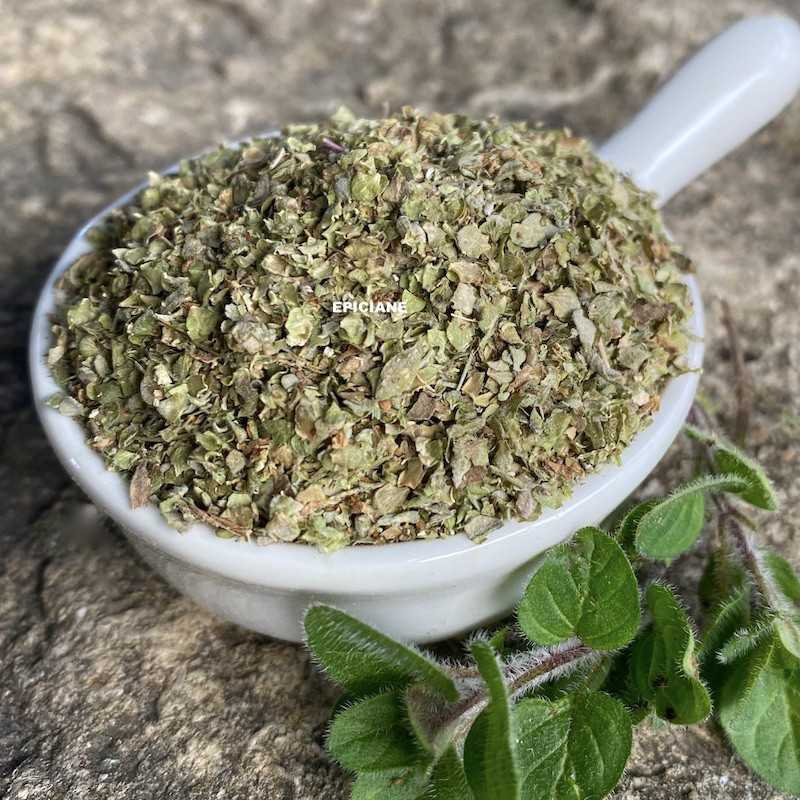
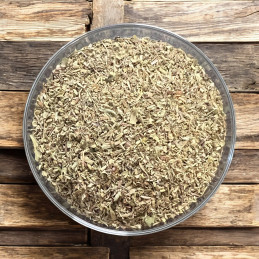
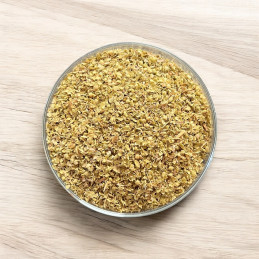
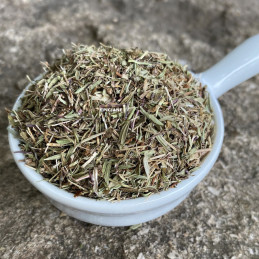
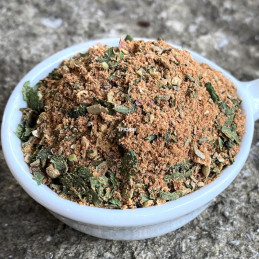
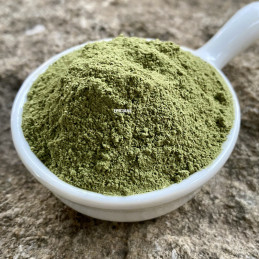
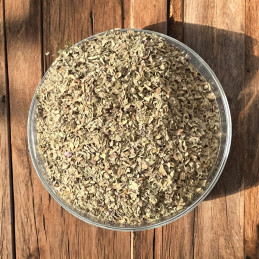
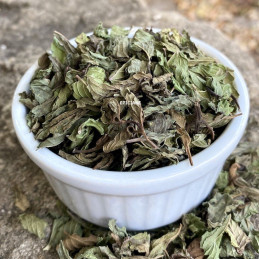
Delivered in a resealable bag
Note: 40g of product has a volume of about 30cl
- GMO-free - No ionization -
Culinary and Other Uses:
 Marjoram is delicious in all tomato-based dishes, where it can also be mixed with its cousin oregano: coulis, pizzas, ratatouille, Bolognese sauces, "Provençal" tomatoes, and soups. It also pairs well with most vegetables, vegetable stuffing, salads, and even bread or dough-based preparations like fougasses. Finally, it’s also excellent with meats and is a key ingredient in the "Herbes de Provence" mix, where it is an essential component.
Its fragrance is milder and more lemony than oregano, making it suitable for use in salads, where oregano would be too strong. For cooking dishes, it’s best added during the latter part of cooking, like most aromatic herbs, to preserve its fragrance.
Who am I?
Origin: Egypt
Scientific Name: Origanum marjorana
Common Names: Garden Oregano, Sweet Marjoram, Shell Marjoram
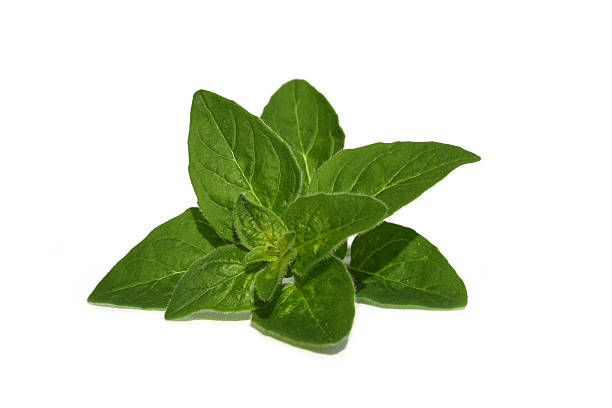
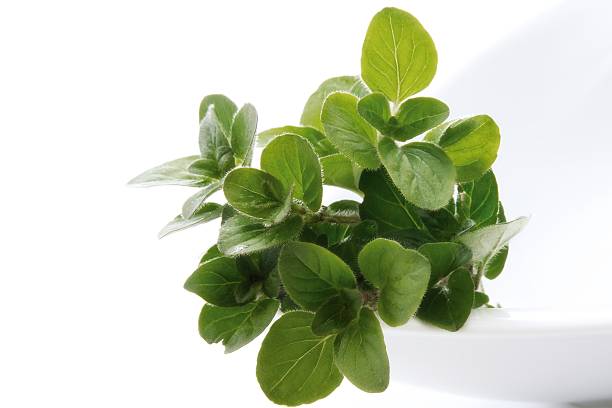 Marjoram is a small perennial plant from the Lamiaceae family, growing up to 60 cm, with oval leaves about 2 cm long and a grayish-green color. It is cultivated as a herb for its aromatic leaves.
In late spring or early summer, it produces small, tightly-packed white flowers at the leaf axils. It’s very similar to oregano and is often confused with it, despite several differences: flower color, plant persistence in winter, fragrance, and leaf size. In Provence, where some still gather wild herbs from the garrigue, it’s actually oregano that’s picked, but it's called "marjoram," further blurring the distinction between the two plants!
Marjoram originates from the Eastern Mediterranean basin (Cyprus, Turkey) and has been cultivated throughout Europe since antiquity. It loves sunny locations but doesn’t tolerate cold, especially when combined with moisture, which makes it impossible to preserve as a perennial north of the Loire.
The richness of marjoram in various compounds makes it a health seasoning, though typical consumption provides only a small portion of our body’s needs! It’s also a good source of vitamin K and iron.
°°°
A Brief History:
The ancient Egyptians already used marjoram (and oregano, by the way) to appease the gods and embalm their dead.
It was introduced to America by Europeans during the early days of colonization.
The name "marjoram" first appeared in the French language in 1338.
Translation:
English and German: Marjoram
***